Seasonal · Travel Guide · 3 November 2026
The Six-Kilometre Walk Around Lake Bled: A Late-Autumn Shore Guide
Follow Lake Bled's six-kilometre shoreline in late autumn: mixed walking surfaces, safe seasonal choices, shorter outings and how it differs from the 14 km hill trail.
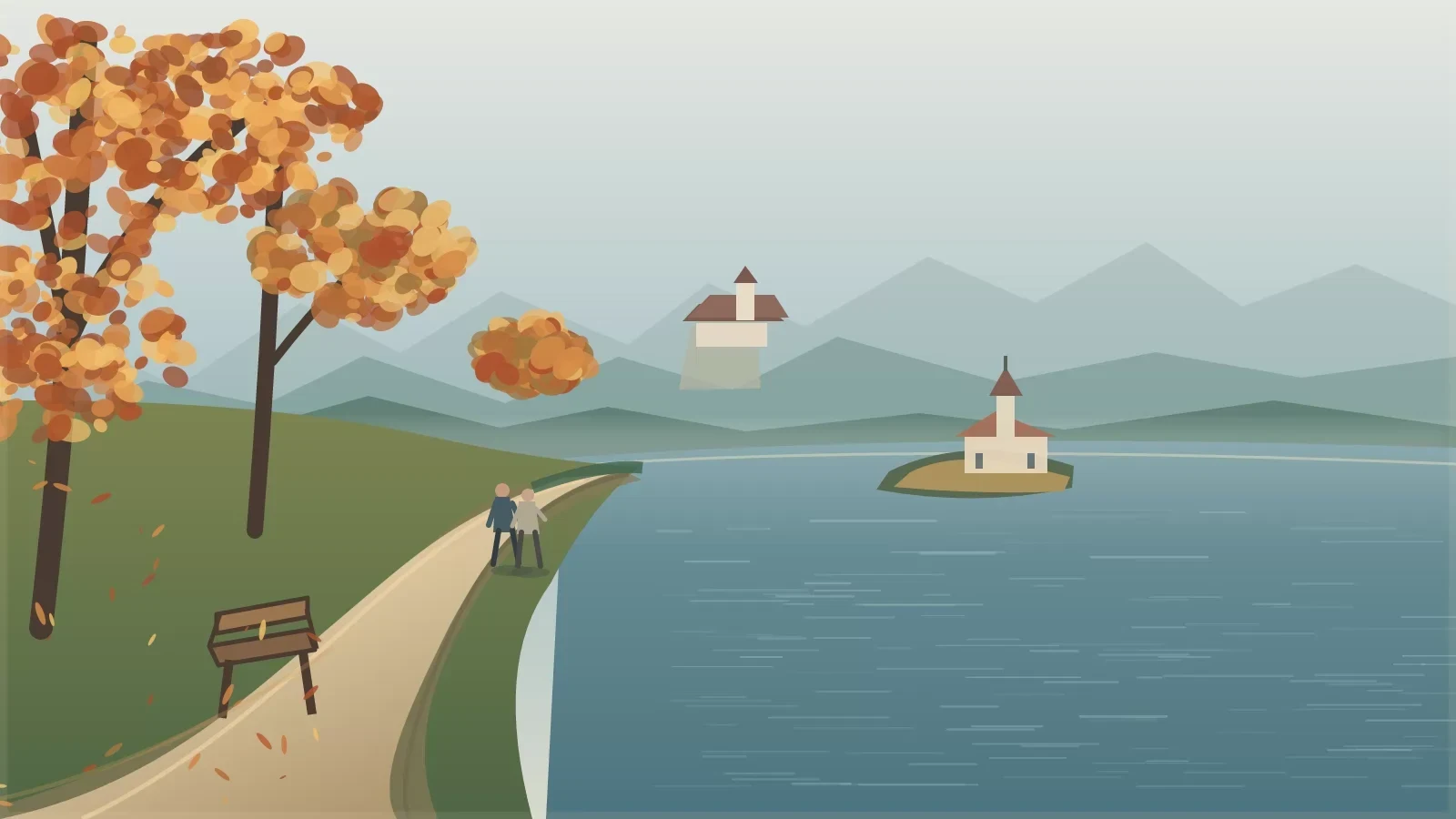
The best way to understand Lake Bled may be to follow its shoreline. The island, castle and mountains keep changing their position as you walk, and an ordinary November afternoon can reveal reflections and quiet corners that a quick photograph from the promenade misses. You do not need a summit, a boat reservation or a packed itinerary to enjoy the lake.
The official Bled Tourist Board describes a six-kilometre walking circuit around Lake Bled. It gives around one and a half hours as a usual walking time, but that is a moving-time estimate, not a deadline. Allow more for photographs, pauses or a slower pace. In late autumn, daylight and underfoot conditions deserve at least as much attention as the distance.
The lakeshore circuit, not a mountain hike
A useful distinction matters before you search for a map. Bled has a 6 km route around the water and a separate named Bled Round Trail of approximately 14 km. The latter takes in higher viewpoints including the castle area, Ojstrica, Mala Osojnica and Straža, and the tourist board describes it as a moderately challenging walk taking roughly four and a half hours. These are not two estimates for the same path.
For a relaxed look at the lake, choose the shoreline circuit. For the 14 km route, plan for more climbing and time, and check trail conditions independently. In November, do not assume that a hilltop viewpoint is a simple extension of the flat lakeside walk.
What the six kilometres feel like
The tourist board says the lakeshore path is partly asphalt and partly sandy ground. In dry weather that mix makes a pleasant change of texture. After rain, the unpaved stretches may feel damp or softer, and fallen leaves can conceal slippery patches. Comfortable walking shoes with dependable grip are more useful than footwear chosen only for a town stroll.
The path offers recurring views of the island church, the cliff-top castle and the mountains beyond. Each side of the lake gives a different relationship between those landmarks. Rather than racing to complete the loop, give yourself permission to stop on a public bench or at a clear, safe viewpoint, leaving enough room for people passing behind you.
The most memorable photograph is not necessarily at a famous location. A line of trees, a boat seen from afar or a fleeting gap in the mist may be just as evocative. Keep to the public path and established viewing areas, without stepping into private gardens or onto vulnerable shore vegetation.
Where should you begin, and which direction?
There is no single compulsory starting gate. Begin wherever you are staying or arriving, and check the local map and signed pedestrian access. If you start from the town-side promenade, the circuit can become an easy walking outing with a return to your starting point. The choice of clockwise or counterclockwise is a personal preference; views will change in either direction.
A full circle is not the only valid version. If you have a short afternoon or are walking with someone who tires easily, choose a stretch of the accessible shore and turn back. A return along the same section gives you the same landscape in a different light. This is often a better decision than pressing on merely to complete a number on a fitness tracker.
Do not assume the six-kilometre figure means every metre is step-free or suitable for every mobility aid. The official mixed-surface description is a starting point, not an accessibility certification. For specific mobility needs, confirm the relevant stretch locally.
November rewards flexibility
Shorter days make an early start sensible, especially if you expect frequent stops. The Bled Tourist Board notes that weather near the mountains can be changeable, and mist is part of the colder-season landscape. Check a local forecast before heading out, but remember that a forecast is not a guarantee of dry paths or clear views.
Bring a compact rain layer, comfortable shoes and something warm enough for standing still by the water. When clouds settle low on the hills, the island can appear and disappear across the lake; when the air clears, the castle and mountain backdrop become more distinct. Neither condition needs to be framed as better: each creates a different walk.
If the weather worsens, turn back along an open route rather than pushing towards an unfamiliar detour. In particular, a steep forest trail to a viewpoint should not be treated as a replacement for a closed or muddy lakeside section.
Check the route before assuming the loop is open
A permanent-looking walking path can still be temporarily interrupted by works. A Bled municipal notice from 5 December 2025 described construction-related closures and an expected reopening before that Christmas; this was a historical announcement, not current November 2026 closure confirmation. Check the latest municipal or tourist-board notices and obey on-site signs on the day. An old blog or GPS trace is no substitute for temporary safety instructions.
If one stretch is closed, do not improvise a crossing along a roadway or use an unmarked forest shortcut. Make a safe out-and-back walk on an open portion of the shore instead. Seeing the whole lake is not worth ignoring a barrier.
The easiest way to appreciate what you see
Try dividing the outing into three unhurried parts. On the first, simply notice how the island changes shape from different angles. On the second, pay attention to the shoreline itself—the trees, water, texture of the path and changing reflections. On the third, look up towards the castle and the larger Alpine landscape.
This is a suggestion for observing, not a mapped three-stage itinerary, and you can begin anywhere. It works whether you have a quiet weekday morning, one short walk between showers or a longer outing with time to sit beside the water.
Photograph the same landmark from two distant points and you may be surprised how different it looks. That small exercise explains why a six-kilometre walk can feel more varied than the distance suggests.
Before you set off
Check the day's forecast, any temporary path notices and the amount of daylight left. Choose a comfortable starting point and allow substantially more than the tourist board's 90-minute moving estimate if you like to pause. Walk the open, signed lakeshore path, accept a shorter out-and-back if conditions dictate, and save steeper viewpoint hikes for a separate outing with appropriate preparation.
Lake Bled does not demand a summit or a timetable. A modest walk, a warm layer and enough curiosity to pause are often all you need.
*Editorial information verified 3 November 2026. The 6 km circuit and the 14 km Bled Round Trail are distinct. The accompanying original cover is a stylized editorial illustration, not a verified photograph of contemporary trail conditions.*
Sources
- Frequently Asked Questions – Lake Bled six-kilometre circuitBled Tourist Board
- Lake Bled – lakeshore walking and viewpointsBled Tourist Board
- Walks – marked paths and walking mapsBled Tourist Board
- 10 Unforgettable Autumn Hikes in Bled and the Julian Alps (published 2025-10-15)Bled Tourist Board
- The closure of the footpath around Lake Bled will be lifted before Christmas (2025-12-05 historical notice)Municipality of Bled