Discoveries · Art & Heritage · 15 November 2026
Beyond the Lake: Honey, Painted Hives and Beekeeping Heritage Around Bled
Discover Slovenian beekeeping near Lake Bled: painted hive panels, local honey, Selo pri Bledu visits and the Radovljica museum, with seasonal advice.
Beyond the Lake: Honey, Painted Hives and Beekeeping Heritage Around Bled
Lake Bled's island and castle are not the only parts of the area's story worth exploring. In the surrounding villages, beekeeping connects food, folk art and generations of practical knowledge. A row of painted wooden hive fronts can reveal as much about Slovenian culture as a postcard view across the water.
This is a quieter excursion to consider, especially if you have already walked by the lake or want a cultural experience that does not depend on reaching a mountain viewpoint. The important distinction in November is between learning about the tradition and expecting an active, bookable bee encounter. The heritage can be explored through museums and published resources across the year; live bee encounters depend on the beekeeper, advance arrangements and the season.
Why painted beehives matter
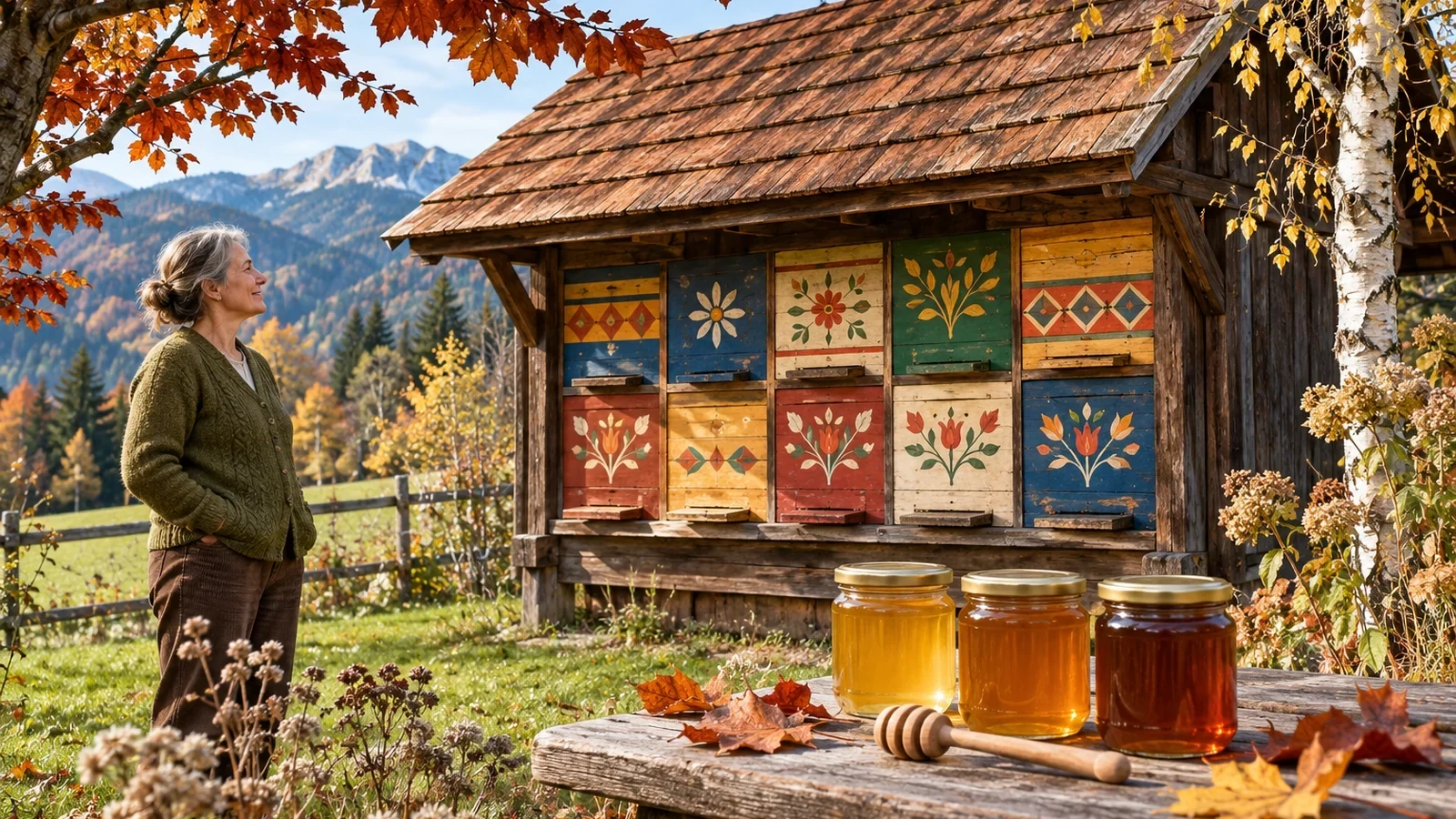
Slovenia's traditional beehouses, or *čebelnjaki*, often contain rows of wooden hives. Their front panels, known as *panjske končnice*, became small canvases for scenes from daily life, religious traditions and folk humour. The painted fronts turn working agricultural equipment into a distinctive form of local visual culture.
The art is not merely a contemporary souvenir idea. Painted panels are part of the heritage that makes Slovenian beekeeping recognizable. UNESCO inscribed “Beekeeping in Slovenia, a way of life” on its Representative List of the Intangible Cultural Heritage of Humanity in 2022, recognizing a living tradition of knowledge, community practice, apiary architecture and art.
Look for the structure of the beehouse as well as its colours: a sheltered wooden building, hive entrances and carefully arranged panels. Real working hives should be admired only with the owner's permission, at a suitable distance, not approached as if they were an open-air museum.
The Carniolan grey bee
Slovenian beekeeping is closely associated with the Carniolan honey bee, commonly called the *kranjska sivka* in Slovene. It is a familiar subject in local educational displays and stories about the region. The most interesting lesson for visitors is how much knowledge is involved beyond collecting honey: caring for colonies, understanding the surrounding plants and managing bees responsibly over changing seasons.
November is not the height of the flowering season. It is therefore a poor time to assume that a summer-style demonstration with active bees will take place. That makes the painted panels, the people behind the craft and the products of the year particularly interesting subjects for a late-autumn visit.
A real beekeeping destination: Selo pri Bledu
Tourism Bled lists an educational beehive at Čebelarstvo Ambrožič, in Selo pri Bledu, operated by Danijela and Blaž Ambrožič. Its official description covers guided explanations of bee life, observation from a safe distance, honey tasting and activities such as painting hive panels and making candles. The tourism listing also describes visitor beekeeping hats and accessibility provisions.
This is a specific operating business, not an always-open public attraction. Contact the hosts directly before travelling to confirm whether visits are offered on your dates, the required booking, language, price and accessibility arrangements. Bled's published descriptions of certain organized bee experiences list May to September, so an autumn visitor should not rely on summer programmes being available.
The listed location is Selo pri Bledu 26, 4260 Bled. Even without a reservation, avoid walking into a private apiary or opening hive equipment. A beekeeper-led visit is the appropriate way to see the activity safely.
A taste of place: Bled and Gorje honey
Honey is a practical way to bring the subject home. Under its local-selection programme, Tourism Bled features traditionally produced honey from beekeepers in the Bled–Gorje area. It identifies the Triglavska roža Bled information centre, Ljubljanska cesta 27, as a point of sale. Availability and the centre's current hours should be checked before making a special journey.
Ask the seller about the honey's source and floral character rather than assuming every jar tastes alike. The region's orchards, meadows and woodland provide varied surroundings for beekeeping; a little curiosity makes a small purchase more memorable. Honey is food and a local craft product, not a promised medical treatment.
A good indoor alternative in nearby Radovljica
If a private hive tour is not running, the Museum of Apiculture in Radovljica offers a more weather-independent introduction. The museum occupies Radovljica Manor at Linhartov trg 1, and its exhibitions explore the relationship between people and bees, including the indigenous Carniolan bee and painted hive panels.
The museum's official timetable, checked on 14 November 2026, lists Tuesday–Sunday, 10:00–18:00, with holiday exceptions. These hours may change, so confirm them on the museum website before setting off. It is a natural addition to a visit to Radovljica's historic centre; for wider planning, see our Radovljica day-trip guide.
How to approach the experience
A thoughtful visit need not be elaborate. Learn to recognize a painted hive panel, find out why the Carniolan bee matters, taste locally sourced honey if you wish, and leave space for a conversation with someone who actually keeps bees. For families, the art and simple story of how a colony works can be as engaging as a long technical demonstration.
During the colder months, put confirmed indoor or pre-booked experiences first. Do not expect access to private beehouses or invent a walk-through attraction from an online listing. If you are sensitive to bee stings or bee products, discuss suitable arrangements with the operator and do not participate in direct handling.
Bled is often described through its water, mountains and famous landmarks. Its beekeeping heritage offers another perspective: a landscape lived in and cared for, one hive, one season and one painted panel at a time.
Sources
- Beekeeping in Slovenia on the UNESCO Representative List of Intangible Cultural Heritage (1 December 2022)Ministry of Culture of the Republic of Slovenia
- Educational beehive — Čebelarstvo Ambrožič, Selo pri BleduTourism Bled
- Beekeeping experience in BledTourism Bled
- Bled honey — local selection and official points of saleTourism Bled
- Beekeeping Course — seasonal May to September listingTourism Bled
- Čebelarski muzej — official visitor informationMuzeji radovljiške občine
- Odpiralni časi — Museum of Apiculture; updated 16 September 2026Muzeji radovljiške občine