Destination · Travel Guide · 5 November 2026
Bled Castle in November: The Climb, the Museum and the View
A practical November visit to Bled Castle: steep access paths, winter opening hours, ticket prices, the museum, printing works and safe late-autumn choices.
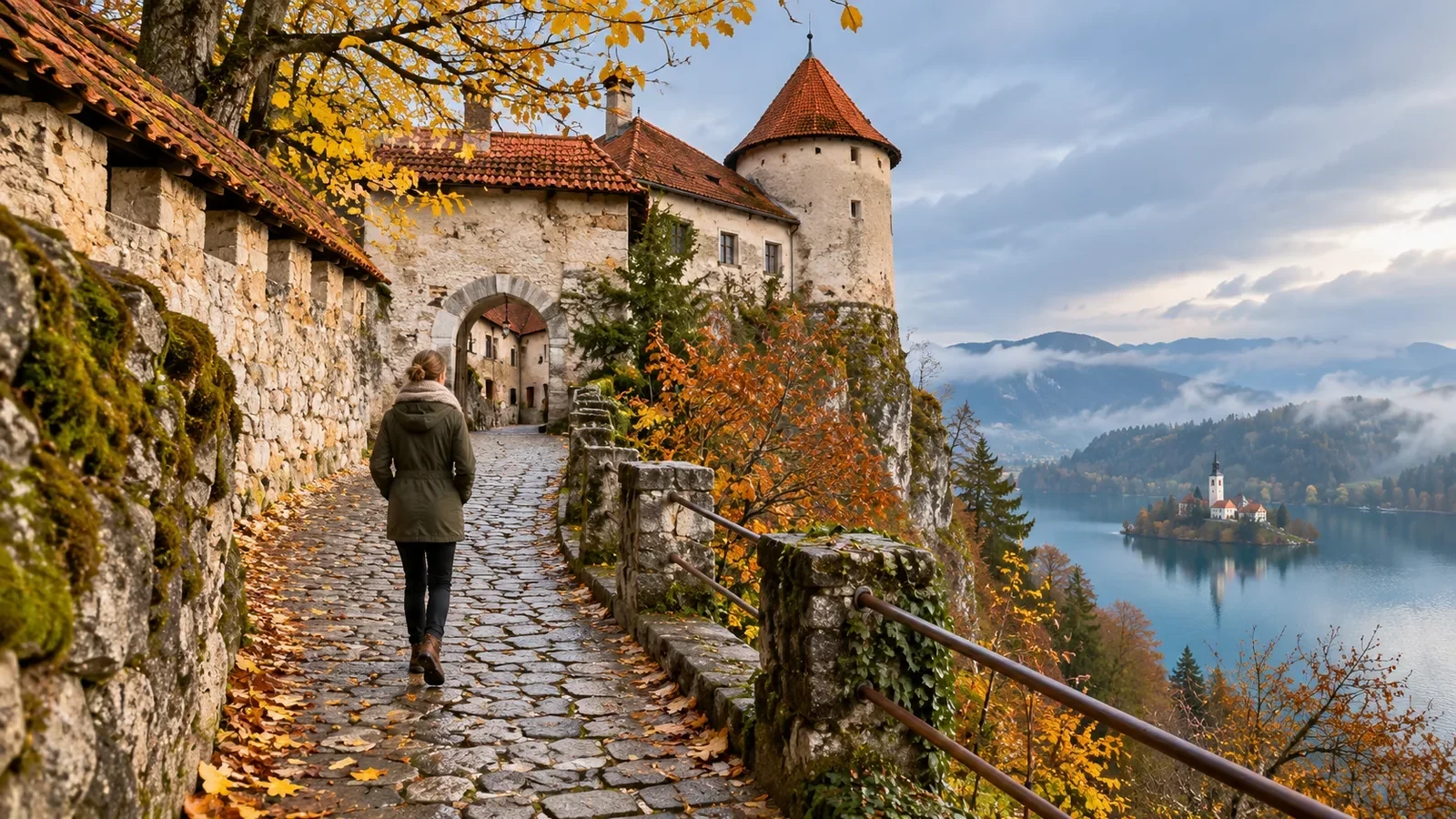
From the shore of Lake Bled, the castle seems to sit on the very edge of the rock. That view is familiar even to visitors who never go inside. In November, however, the short climb and the rooms behind those red roofs can make a particularly rewarding half-day: part local history, part lookout, and part practical lesson in why it is worth slowing down.
Unlike a circuit of the lake or a boat trip to the island, this visit has an admission ticket, an uphill approach and a closing time. Plan those three things first; the rest can be unhurried.
Plan for the winter hours, not the summer schedule
The castle operator lists 08:00–18:00 every day from November through March, with last admission at 17:30. In April–October the published hours run later. Seasonal opening does not mean every demonstration, café or special activity has identical hours, and an event may change access on a particular day.
The operator recommends allowing at least two hours to explore the castle. That is more useful than treating last admission as a sensible arrival target. An afternoon visit should leave time for the climb, ticket queue, museum rooms and outdoor terraces *before* the gates close. Check the official opening-hours page again on your visiting day.
November also brings shorter daylight and potentially damp leaves. An early or middle-of-the-day visit is a practical choice if outdoor views matter to you. Clear skies, mist and drizzle each produce a different atmosphere, but none can be promised in advance.
Getting there on foot: the climb is part of the visit
The official castle access guide describes Rikli's Path, beginning above the Castle Bathing Area, as approximately 300 metres of uphill walking, with a nominal 10-minute ascent. It is a short distance, but not necessarily an easy ten minutes. A second signed approach joins the ascent from the area of Slovenski trg and St Martin's Church.
The paths climb through forest below the castle rock. In wet weather, take particular care on steps, stone and fallen leaves. Allow extra time for photographs or a slower pace, and wear shoes with good grip rather than assuming that an ordinary town pavement leads straight to the entrance. Even the approach from the upper car park has a notable gradient.
The castle's own FAQ warns that a paved approach can be steep, reaching up to 34 degrees in places, and may be difficult for wheelchair users, visitors with limited mobility or families with pushchairs. Do not describe this visit as step-free. Contact castle staff beforehand if accessibility will determine whether the outing is suitable.
Coming from the lake? You can combine the castle ascent with a short stretch of waterfront, but treat it as an additional uphill activity, not part of the relatively gentle [six-kilometre lakeshore circuit](/journal/around-lake-bled-on-foot-autumn-six-kilometre-circuit/).
Arriving by car or public transport
If walking up from town is not appropriate, the castle operator lists two paid parking options: an upper parking area close to the entrance at Grajska cesta 61 and a lower one at Rečiška cesta 2, with a longer walk uphill. On the official access page the upper lot is listed at €3 per started hour, and the lower car parking at €2.50 per hour; charges and access restrictions should be checked again on the day. A nearby parking space does not necessarily remove the steep final approach.
Visitors arriving without a car can use Bled's regular connections and then choose a signed pedestrian approach or make other arrangements locally. For the distinction between the town's railway stations and bus connections, see our separate [Bled without a car guide](/journal/bled-without-a-car-buses-trains-and-the-lake-on-foot/). Do not assume a seasonal shuttle operates just because an older travel blog mentions one.
What to see beyond the famous terrace
The view is a strong reason to visit, but the castle's cultural rooms justify setting aside more time. The museum collection, developed with the National Museum of Slovenia, follows the history of Bled and the surrounding settlements through archaeological discoveries and later periods. The operator describes a renewed permanent exhibition following works in 2025, so even visitors familiar with older castle displays should check what is open now.
The castle printing works introduces historical manual printing using a replica of Gutenberg's press. A hands-on print or demonstration may depend on staff and current availability; consider it an opportunity rather than a guaranteed performance at an exact time.
The castle also contains a 16th-century chapel, later altered in Baroque style after the earthquake of 1690, and the STOLP gallery, where exhibitions change. Together they offer a different experience from the viewpoint alone: stone walls, local craft, old texts and the story of people who lived around the lake long before tourism.
The castle is first mentioned in written records in 1011, according to its own historical account. Its cliff-top setting approximately 130 metres above the lake helps explain both its former defensive role and the panorama visitors seek today.
Tickets: know the published price before arriving
As checked on 5 November 2026, the castle's published individual admission list shows €19 for adults, €11.50 for students, €7 for children aged 6–14, €16 for seniors aged 65 and over and visitors with disabilities, and free entry for children under six. The operator says some family and tourist-card discounts are available with appropriate proof; discounted tickets may need to be purchased at the ticket office rather than online.
These are published rates, not a guarantee against later changes or special-event arrangements. Consult the official ticket and discount list before buying, especially when travelling as a family.
Small choices that make the visit easier
Give yourself permission to stay indoors longer if the weather turns. The museum and printing works provide a history-focused complement to the outdoor terrace, although individual spaces and demonstrations may have their own operating arrangements.
A rain layer and footwear suited to steep wet surfaces are more important than planning a precise photograph. If a path is closed or signed as unsafe, do not try to bypass it. People walking with children or anyone with balance or mobility concerns should choose the approach first, not discover its difficulties midway.
Dogs are allowed on a leash in the outdoor castle areas under the operator's current FAQ, but not inside museum rooms, the gallery, printing works or chapel. That difference matters when travelling with a pet and hoping to see the full interior.
Finally, check the opening-hours, access and price pages on the morning of your visit. Conditions, building works, events and offers can change faster than a travel article.
A castle visit, not a race to the top
Bled Castle is best approached as a separate cultural outing rather than squeezed between a lake lap and an island crossing. Climb at a comfortable pace, explore at least one room you would otherwise have missed, and leave a little time on the terrace for the lake to look different from above.
*Visitor information checked 5 November 2026. The accompanying cover is an original artistic illustration, not a photograph of current path conditions or an exact wayfinding view.*
Sources
- Bled Castle — Opening hours and last entryZavod za kulturo Bled / Bled Castle
- Access and parking — walking trails, car parks and gradientsZavod za kulturo Bled / Bled Castle
- Price list — admission and current published discountsZavod za kulturo Bled / Bled Castle
- Inside the castle — museum, printing works, chapel, galleryZavod za kulturo Bled / Bled Castle
- Frequently asked questions — accessibility, pets and visit durationZavod za kulturo Bled / Bled Castle
- Bled Castle visitor informationBled Tourist Board