Seasonal · Seasonal Bled · 23 November 2026
Lake Bled in the Mist: A Slower Way to Photograph the Lakeshore
When mist softens Lake Bled, try a thoughtful lakeside photography outing: simple compositions, weather checks, respectful stops and no steep viewpoint climb.
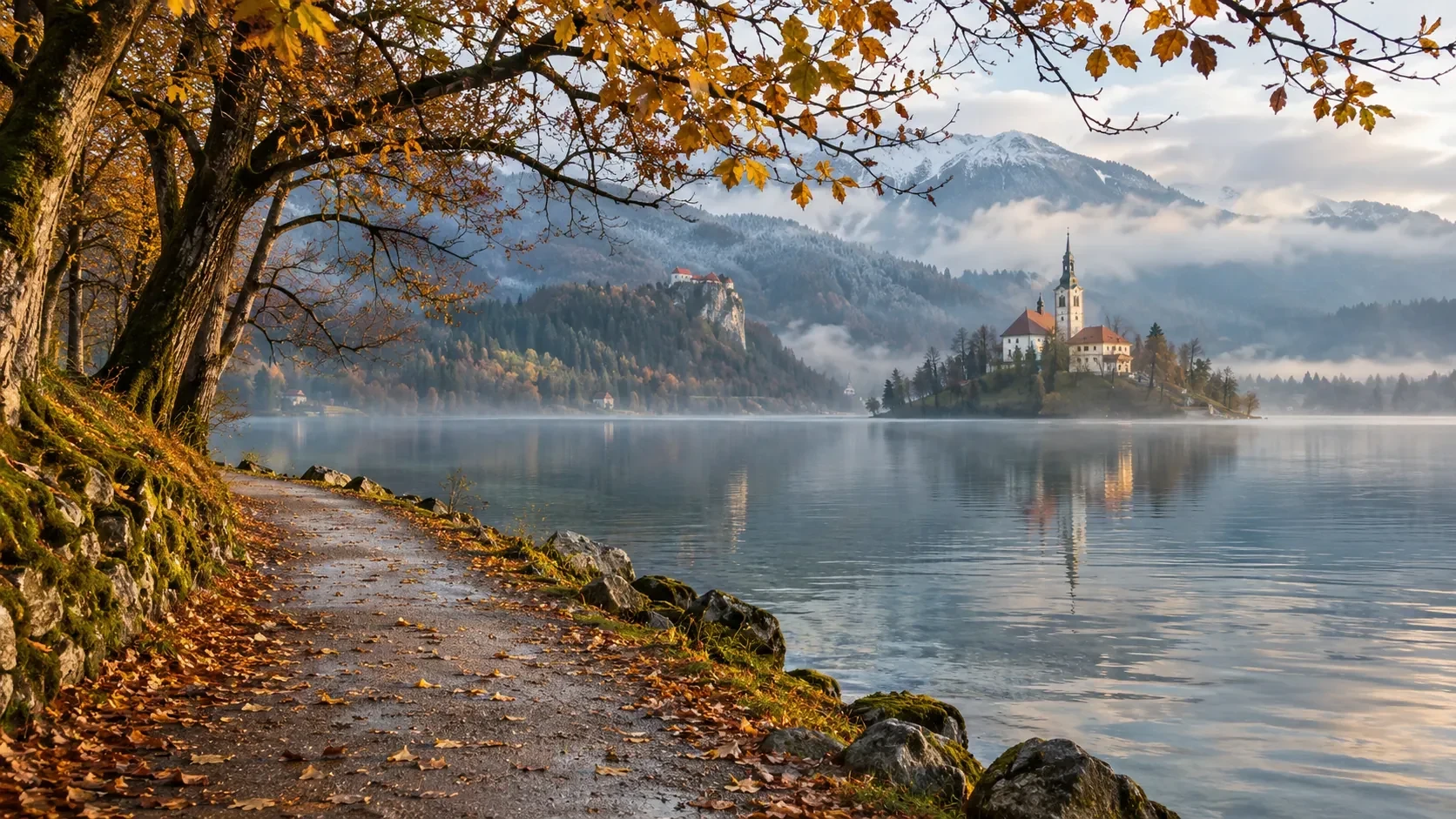
Some mornings at Lake Bled begin without the postcard view. Mist can hide the island, soften the castle's outline and turn the far shore into a pale suggestion. That is not necessarily a disappointing photography day. It can be a chance to notice the lake at a smaller scale.
This is a guide to looking and photographing, not another itinerary for completing the six-kilometre circuit or climbing to a panoramic viewpoint. Choose a short, comfortable section of the public lakeshore that suits the conditions and return whenever you wish.
Begin with the weather, not a promised sunrise
Bled's official visitor information notes that fog is possible in winter and that local weather is changeable. Mist is not guaranteed on any particular morning, and a forecast cannot promise when it will clear. Before leaving, check the Slovenian Environment Agency's latest weather information and any relevant warnings. A dry forecast is no guarantee that every shaded section will be free of frost or slippery leaves.
There is no need to arrive in darkness. If visibility is poor, wait for daylight and keep to familiar, clearly accessible public paths. A beautiful photograph is never a reason to step onto an unstable bank, cross a barrier or enter the water.
Photograph what the mist reveals
Rather than waiting only for the island to emerge, try three different frames:
A wide scene. Use the shoreline as a gentle foreground and leave space for the haze. The empty part of the image is often what conveys the quiet.
A middle-distance detail. A tree reflected in still water, the curve of a railing or a cluster of autumn leaves can give the picture structure even when the distant mountains disappear.
A changing view. Photograph the same composition twice, several minutes apart. Light and visibility may change subtly; if nothing changes, that is part of the morning too.
A phone is enough. Wipe moisture from the lens, hold it steady and avoid overprocessing the haze into an artificial blue or orange. For a more natural result, preserve some softness instead of forcing every distant object to appear sharp.
Share the shore
The lake is a lived-in place as well as a visitor attraction. Keep paths open for walkers, residents and people with mobility aids. Ask before making a stranger the identifiable subject of a photograph, and keep voices and equipment unobtrusive near homes or quiet public spaces. Leave plants, stones and shoreline habitats as you found them.
The destination's own visitor guidance stresses the sensitivity of the lakeside environment. A tripod or long photo session does not grant exclusive use of a public path.
A simple, weather-aware plan
Bring warm layers, shoes with reliable grip and a cloth for the camera lens. Choose one accessible public lakeside area rather than committing to the full circuit. Give yourself time to watch the water and make a handful of photographs; if rain, wind, cold or poor footing makes the outing uncomfortable, stop.
For travellers who want the full walk around Lake Bled, our separate Journal guide to the autumn six-kilometre circuit covers that route. This quieter photographic approach has a different purpose: staying in one place long enough to see how the scene changes.
The most memorable photograph may be the one in which very little happens: a pale reflection, a disappearing shore and the feeling of having been present for it.
Sources
- Frequently Asked QuestionsBled Tourism
- Suggested hiking trails around BledBled Tourism
- National Meteorological ServiceSlovenian Environment Agency (ARSO)
- A green letter to all friends of BledBled Tourism